



Frameworks, core principles and top case studies for SaaS pricing, learnt and refined over 28+ years of SaaS-monetization experience.
Thank you! Your submission has been received!
Oops! Something went wrong while submitting the form.
.png)
AI pricing

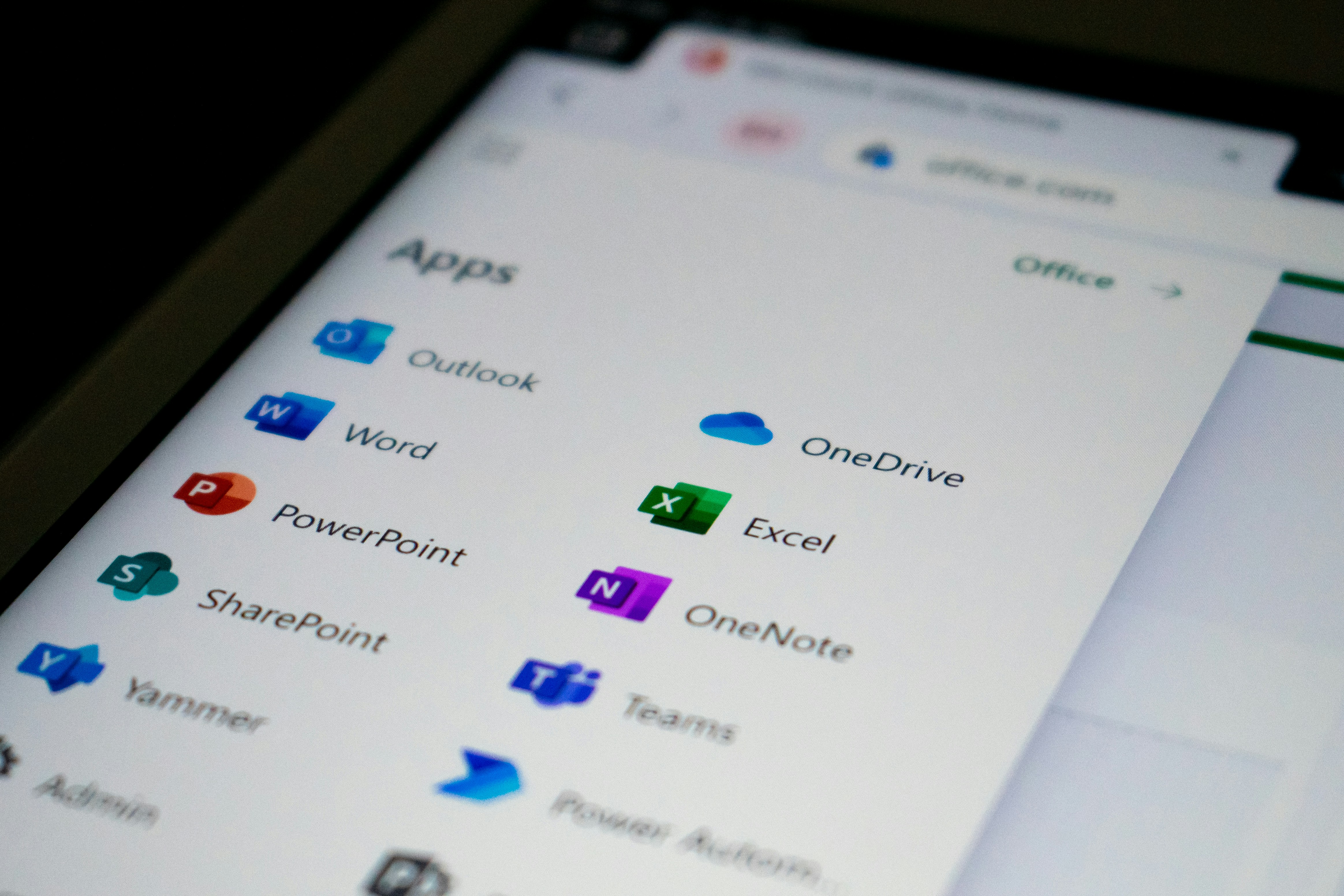
Beginning July 1, 2026, Microsoft will raise commercial Microsoft 365 prices by roughly 13 to 17 percent across core Business and Enterprise plans. Microsoft frames this as an adjustment aligned with expanded AI capabilities, enhanced security, and improved management features that are being added throughout 2026. Copilot‑style assistants will appear directly inside Word, Excel, Outlook, PowerPoint, OneNote, and Teams, and Security Copilot will be included for Microsoft 365 E5 customers, while foundational plans such as E3, E5, Business Basic, and Business Standard will all see list price increases [1].
Microsoft says more than 400 million people now use Microsoft 365 commercial apps and that over 90 percent of Fortune 500 companies are already using or piloting Copilot[2].This makes the change a suite‑level reset rather than a narrow, feature‑based adjustment. Broad price increases of this kind across multiple commercial SKUs are rare for Microsoft; previous Office 365/Microsoft 365 changes were narrower in scope and less frequent, so this scale of repricing signals deliberate strategic repositioning rather than a short‑term response to cost spikes[3].
Microsoft’s price shift is unfolding during a competitive escalation with Google Workspace. In early 2025, Google announced that Gemini AI features in Gmail, Docs, Sheets, and Meet would be included in Workspace Business and Enterprise plans at no separate AI subscription charge, replacing what had been 20–30 dollar‑per‑user Gemini add‑ons. At the same time, Google raised Workspace Business prices by about 2 dollars per user per month, with Business Starter, Standard, and Plus seeing increases of roughly 17 to 22 percent on flexible and annual plans [4].
Microsoft, meanwhile, began by selling Microsoft 365 Copilot as a 30 dollar per‑user premium on top of existing E3 and E5 licenses and is now broadening AI availability across more Microsoft 365 plans while raising suite list prices by roughly 13 to 16 percent from mid‑2026. Both vendors describe these increases as funding “AI and security,” even though the underlying economics of AI inference and tokens are trending down as models and infrastructure become more efficient.This creates an unusual economic tension: AI is getting cheaper at the model layer while productivity software wrapped around it is getting more expensive at the suite layer[5].
Software pricing historically follows a deflationary trajectory. After initial development costs are paid, marginal distribution costs fall toward zero, and competitive pressure pushes unit prices down; this has been reflected in long‑term software CPI indices and the shift from perpetual licenses to SaaS, where per‑user effective prices often fell even as capabilities increased. Productivity suites like Office and Google Apps are classic examples of this trend: broad adoption, low marginal cost, and relatively modest, infrequent list‑price changes over many years[6].
AI should, in theory, follow a similar path. Efficiency in training and inference is improving rapidly. Analysis of large language models shows that, for a given performance level, inference costs have fallen by roughly tenfold per year, with the cheapest model achieving a particular benchmark score dropping from around 60 dollars per million tokens in 2021 to about 0.06 dollars per million tokens with recent Llama‑based offerings. Open‑source model families such as Llama 3 and Llama 4 are increasingly competitive with proprietary frontier models on standard benchmarks while being significantly cheaper to run or self‑host, sometimes more than seven times less expensive than comparable closed models.
At the same time, global AI infrastructure investment is projected to reach into the trillions of dollars by the end of this decade, with estimates of 3-5.2 trillion dollars in AI‑specific data center and compute investment by 2029–2030. However, those capital costs are spread across millions of workloads, which means the effective per‑request cost of AI should decline rather than rise as utilization grows. From an economic standpoint, AI should make software cheaper at the margin; Microsoft’s price increases reflect the opposite dynamic[7].
AI costs fall into three categories, and they are often misunderstood.
Training costs are high, occasionally reaching tens of millions of dollars, but they occur infrequently and are amortized over the model lifecycle.
Inference costs are falling sharply due to hardware efficiency, model compression, quantization and improved runtime systems. These costs govern how much it costs Microsoft to process one more Copilot request. This is the cost curve that is declining rapidly.
Infrastructure costs such as data centers and energy consumption are rising globally, although these are tied to scaling demand, not to the fixed cost of a suite license.
The key point is that the marginal cost most relevant to suite wide AI availability, which is the cost of inference, is falling, not rising. This makes broad price hikes difficult to justify purely on cost economics.
When a vendor with Microsoft’s structural dominance raises prices by double digits in a saturated category, the primary driver is not the cost of intelligence. It is the value of dependence. Research on SaaS and cloud pricing shows a common pattern: early‑stage markets monetize features, growth‑stage markets monetize workflows, and mature markets monetize switching friction and dependency, often through bundling and all‑in suites[8].
Microsoft is firmly in that late stage. Its pricing power rests on entrenched file formats (Word, Excel, PowerPoint), near‑universal desktop distribution, the ubiquity of Teams in enterprise communications, tight integration of identity and access management, and procurement standardization around E3 and E5 contracts. In practice, this means Microsoft is not pricing the marginal value of Copilot; it is pricing the difficulty of leaving the Microsoft productivity stack, a pattern consistent with broader data on “SaaS inflation” outpacing general CPI and being concentrated in core, hard‑to‑switch platforms.
This is why the price hike is not truly about AI value. It is about Microsoft’s control over the productivity architecture that organizations depend on and its confidence that, even as AI itself commoditizes, its distribution and lock‑in will allow it to reset the baseline price of doing knowledge work inside the Microsoft ecosystem.
Historically, Microsoft and Google have been extremely reluctant to raise prices on their core productivity suites. For years, both treated Office and Workspace as low‑margin, high‑volume franchises that lock in users and drive cloud and ecosystem spend elsewhere. Price increases were small, infrequent, and often limited to specific SKUs or regions, not broad, double‑digit hikes across the entire commercial stack.
What’s happening now is different. Microsoft is resetting Microsoft 365 list prices across E3, E5, and Business plans in a way that hasn’t been seen in a long time. Google, in parallel, is raising Workspace prices while folding Gemini into the core plans. This suggests that both vendors see a narrow window where they can push through a meaningful repricing of the productivity layer, not just the AI add‑on.
Given how hard it is to raise prices in a mature SaaS category, this move is likely to be a once‑in‑a‑decade reset, not the start of annual price hikes. Once the new price floor is set, it will probably stay there for years, with future value captured through packaging, bundling, and upselling rather than repeated list‑price increases.
Software has always deflated. Once the initial R&D is done, marginal distribution costs collapse, and competition forces prices down. AI follows the same pattern: training is expensive, but inference is becoming cheaper by the quarter thanks to better models, hardware, and open‑source alternatives.
So yes, the underlying intelligence layer will commoditize. But commoditization doesn’t mean zero value; it means that the real monetization power moves up the stack-to distribution, to workflows, to lock‑in, and to packaging.
Microsoft’s current price hike is not a bet that AI will stay expensive. It’s a bet that Office, Teams, and the Microsoft identity stack will remain hard to replace, and that customers will pay more for the convenience of staying inside that ecosystem, even as the AI inside it becomes cheaper and more common.
Join companies like Zoom, DocuSign, and Twilio using our systematic pricing approach to increase revenue by 12-40% year-over-year.